


Menopausal Hormone Therapy (MHT), also known as Hormone Replacement Therapy (HRT), is a prescription treatment for symptoms of menopause and perimenopause. It is the most effective treatment for hot flushes and night sweats and may also help with other menopause symptoms, depending on the type of treatment used.
MHT is available in several forms, including estrogen patches, gels and tablets, as well as local vaginal estrogen for certain  vaginal and urinary symptoms. The most suitable option depends on your symptoms, stage of menopause, medical history, whether you have a uterus and your preferences.
Understanding the benefits and risks of MHT can help you make informed decisions about your treatment options with your doctor. MHT may be one element of a broader approach to perimenopause and menopause treatment.
Written by WellFemme staff writer Sally Stankovic | Medically reviewed by Dr Kelly Teagle, Founder and Clinical Director, MBBS, BSc, FRACGP, GDip Women’s Health
Date published: 6 November 2026
Key Points About Menopausal Hormone Therapy

MHT is the most effective treatment for hot flushes and night sweats associated with menopause.
Treatment may involve estrogen alone or estrogen combined with a progestogen, depending on whether you have a uterus and your individual circumstances.
Local vaginal estrogen can help relieve certain vaginal and urinary symptoms and is different from systemic MHT.
The benefits and risks of MHT vary between individuals. Whether treatment is suitable depends on your symptoms, health, medical history and preferences.
MHT is not contraception, so you may still need contraception during perimenopause.
This page provides general health information and is not a substitute for individual medical advice. A qualified doctor can help you understand whether MHT may be appropriate for you.
On This Page
What Is Menopausal Hormone Therapy – and Is It the Same as HRT?
Menopausal hormone therapy (MHT) and hormone replacement therapy (HRT) generally refer to the same type of prescription treatment for menopause symptoms. MHT is the preferred term in many clinical settings, although HRT remains widely used in everyday conversation and online searches.
Estrogen is the main hormone used to treat many menopause symptoms. Depending on your circumstances, it may be prescribed alone or combined with a progestogen, which may be progesterone or a synthetic alternative.
For most people who have a uterus, systemic estrogen needs to be combined with an adequate progestogen to protect the lining of the uterus, known as the endometrium. The appropriate treatment depends on individual circumstances, including your medical history.
MHT is different from the combined oral contraceptive pill. Although both contain hormones, they have different purposes, formulations and prescribing considerations. MHT does not prevent pregnancy, so contraception may still be needed during perimenopause.
It’s also important to distinguish systemic MHT from local vaginal estrogen. Systemic treatment delivers hormones into the bloodstream and is primarily used to relieve symptoms such as hot flushes and night sweats. Local vaginal estrogen targets vaginal and surrounding tissues to help relieve certain vaginal and urinary symptoms, with much lower systemic exposure than systemic MHT.
MHT isn’t a single product or treatment plan. Different hormone combinations, formulations and delivery methods are available, and the most suitable option depends on your symptoms, health, medical history and preferences.
For a broader overview of hormonal and non-hormonal approaches, see Menopause Treatment Options.
What Symptoms Can MHT Help?
MHT is the most effective treatment for vasomotor symptoms (hot flushes and night sweats). It may also help with other menopause-related concerns, depending on the symptoms and type of treatment used.
| Symptom or concern | How MHT may help |
| Hot flushes and night sweats | Systemic MHT is the most effective treatment for these symptoms. |
| Sleep disruption | Sleep may improve when night sweats and other menopause symptoms are better controlled. |
| Vaginal dryness and discomfort | Local vaginal estrogen can help relieve vaginal dryness, irritation and discomfort. |
| Pain or discomfort during sex | Local vaginal estrogen may help when symptoms are related to menopause-related changes in vaginal and vulvar tissues. |
| Certain urinary symptoms | Local vaginal estrogen may help with some menopause-related urinary symptoms. |
| Mood changes | Mood may improve when symptoms such as night sweats and disrupted sleep improve. MHT is not a universal treatment for depression or anxiety. |
| Bone health | MHT can help prevent bone loss and reduce fracture risk in appropriate individuals while treatment continues. |
Not every symptom experienced during midlife is caused by menopause, and not every symptom will respond to hormone treatment. Changes in mood, memory, concentration, weight, joint comfort and sexual desire can have several contributing factors and may need individual assessment.
Other symptoms may benefit from non-hormonal approaches, including prescription medicines, psychological therapies and lifestyle strategies. Explore our guide to non-hormonal menopause treatments.
Persistent, severe, new or unusual symptoms should be discussed with a healthcare professional.
For more information, read our blog, “Hot Flushes & Night Sweats” and our downloadable guide, “Vaginal & Urinary Symptoms in Midlife”
What Types of MHT Are Available?
Systemic MHT delivers hormones into the bloodstream and is generally used to relieve menopausal symptoms. Estrogen is available as skin patches, gels and oral tablets.
If you have a uterus, a progestogen is generally needed alongside systemic estrogen to protect the uterine lining.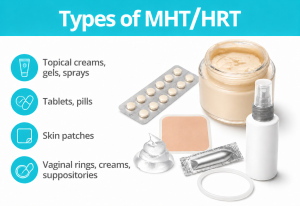
Local vaginal estrogen is applied inside the vagina or to surrounding tissues to relieve symptoms such as vaginal dryness, irritation and discomfort. The Australasian Menopause Society supports that low-dose vaginal estrogen used at recommended doses generally does not require a progestogen, even when the uterus is present. It may also be used alongside systemic MHT when local vaginal or urinary symptoms continue.
Unlike systemic MHT, local vaginal estrogen is not intended to treat hot flushes or night sweats.
Estrogen-only MHT is generally prescribed to people who have had a hysterectomy, although individual circumstances and the type of surgery matter.
Combined MHT contains estrogen and a progestogen. For most people with a uterus, adequate progestogen protection is needed alongside systemic estrogen to reduce the risk of overgrowth of the uterine lining, known as endometrial hyperplasia, and endometrial cancer.
Cyclical or sequential MHT combines estrogen with a progestogen for part of each treatment cycle. It commonly produces a scheduled withdrawal bleed and is often used during perimenopause.
Continuous combined MHT uses estrogen and a progestogen throughout the treatment cycle. It is generally intended for people who are postmenopausal. Irregular bleeding or spotting can occur when starting treatment, but bleeding should be discussed with your doctor, particularly if it is heavy, persistent or occurs after you have been postmenopausal.
Testosterone is not a standard component of MHT. It may be considered for appropriately assessed postmenopausal women with hypoactive sexual desire dysfunction after other contributing factors have been addressed. It should not be presented as a general treatment for fatigue, weight gain, mood, cognition or other menopause symptoms.
Tibolone and hormonal IUDs:
Tibolone: a prescription hormonal treatment that may suit some postmenopausal women.
Mirena: may provide contraception, manage bleeding and supply the progestogen component of some MHT regimens; it does not supply oestrogen.
The Australian Government also identifies some additional options.
Patches, Gels and Tablets: What’s the Difference?
Estrogen patches and gels deliver hormones through the skin, while tablets are taken orally. Patches may be convenient for people who prefer not to take a daily tablet, while gels involve regular application and precautions to prevent transfer to other people.
Patches and gels avoid first-pass metabolism through the liver and are generally associated with a lower risk of blood clots than oral estrogen. They may be preferred for some people with relevant risk factors, although the most appropriate route depends on individual circumstances.
Progestogens may be taken orally or, in some treatment regimens, delivered through a hormonal intrauterine system.
If a treatment causes side effects or does not adequately relieve your symptoms, your doctor may consider a different dose, formulation or treatment plan.
How Does the Route Affect Benefits and Risks?
The route of estrogen administration can influence how the body processes the hormone and may affect certain health risks. The overall balance of benefits and risks also depends on the hormone formulation and dose, treatment duration and your medical history.
Practical considerations matter too. Skin sensitivity, application routines, convenience and product availability can influence which option best suits you. Your doctor can help you weigh up these factors.
What Are the Benefits of MHT?
For people who are suitable candidates, MHT is the most effective treatment for vasomotor symptoms. It can also help with certain vaginal and urinary symptoms and may benefit bone health.
Relief from Hot Flushes and Night Sweats
Systemic MHT can reduce the frequency and severity of hot flushes and night sweats, which may otherwise disrupt sleep and everyday life. The degree of improvement varies.
Sleep and Quality of Life
When night sweats and other menopause symptoms disrupt sleep, reducing those symptoms may improve sleep and everyday wellbeing. However, persistent sleep problems can have other causes and may need further assessment.
Vaginal and Urinary Symptoms
Local vaginal estrogen may help relieve dryness, irritation, discomfort during sex and certain urinary symptoms when these are related to reduced estrogen exposure in vaginal and vulvar tissues.
Bone Health
MHT can help prevent bone loss and reduce fracture risk in appropriate individuals while treatment continues. Bone health is particularly relevant for people who experience menopause earlier than usual.
MHT may not be the most suitable option for everyone concerned about bone health. Your doctor can assess your individual risk and discuss suitable approaches.
Benefits Need to Be Considered Individually
MHT can make a meaningful difference to menopause symptoms, but it is not a general treatment for aging or a guaranteed way to prevent chronic disease. The decision to use MHT should take into account your symptoms, medical history, personal risk factors and treatment goals, in consultation with your doctor.
What Are the Risks of MHT?
The risks of MHT vary according to your health, age, timing of treatment, hormone formulation, route and duration of use. For many healthy women with menopause symptoms who start before age 60 or within 10 years of menopause, the overall balance of benefits and risks may be favourable. This is a general guide, not a guarantee that treatment is suitable for everyone.
Your doctor can help you understand how the evidence applies to your circumstances.
Possible Side Effects
Some people experience side effects when starting or changing MHT. Depending on the treatment, these may include:
Breast tenderness
Bloating or fluid retention
Headaches
Nausea
Skin irritation from patches or gels
Changes in bleeding patterns
Some side effects settle as your body adjusts, while others may require a change in dose, formulation or regimen. Contact your doctor if side effects are troublesome, persistent or concerning, and follow their advice about bleeding.
Breast Cancer Risk
Combined MHT, which contains estrogen and a progestogen, is associated with an increased risk of breast cancer. The risk generally increases with longer duration of use and decreases after treatment stops.
The evidence for estrogen-only MHT differs from that for combined treatment. Estrogen-only MHT is generally prescribed to people who have had a hysterectomy.
Your underlying breast cancer risk, medical history and the type and duration of treatment all matter when weighing up the benefits and risks.
Read about Breast Cancer Risk Factors from Cancer Australia
Blood Clots and Cardiovascular Considerations
Oral estrogen is associated with a higher risk of blood clots than estrogen delivered through the skin. Patches and gels may be preferred for some people with relevant risk factors.
Stroke risk, cardiovascular health, age and the time since menopause also matter. Your doctor can assess your medical history and discuss which options may be appropriate.
Protecting the Uterine Lining
For most people who have a uterus, systemic estrogen needs to be combined with adequate progestogen to protect the uterine lining. Without adequate protection, the lining can thicken, increasing the risk of endometrial hyperplasia and endometrial cancer.
New, persistent or unexplained vaginal bleeding should be assessed rather than automatically attributed to menopause or MHT.
When Side Effects Need Urgent Attention
Seek urgent medical care if you develop sudden chest pain, unexplained shortness of breath, cough up blood, experience painful swelling or redness in one leg, or have possible signs of a stroke, such as facial drooping, arm weakness, difficulty speaking, sudden vision changes or a severe unusual headache. Heavy vaginal bleeding, yellowing of the skin or eyes, or another sudden and concerning reaction also requires prompt assessment.
Call 000 if symptoms are severe or potentially life-threatening, and tell the treating clinician that you are using MHT.
New, persistent or unexplained bleeding and other concerning changes should be discussed promptly with your doctor rather than waiting for a routine review.
How Do Doctors Choose the Right MHT Treatment?
There is no single best MHT for everyone. Your doctor will consider your symptoms, stage of menopause, medical history and preferences to identify suitable options.
An assessment may include:

Symptoms: Which symptoms are most troublesome and how they affect everyday life.
Menopause stage and bleeding: Whether you are in perimenopause, have reached menopause or experienced menopause earlier than usual, and whether any bleeding needs investigation.
Uterus and contraception: Whether you have had a hysterectomy, whether you need protection of the uterine lining and whether pregnancy is still possible.
Medical history: Including migraine, blood pressure, blood clots, liver or gallbladder disease, cardiovascular health and bone health.
Cancer history: Any personal or relevant family history.
Medicines and previous treatments: Including side effects or difficulties experienced.
Preferences: Such as whether you prefer a patch, gel, tablet or local treatment.
Your doctor may recommend further assessment if another health condition could be contributing to your symptoms or if additional checks are needed before treatment.
Who May Need Additional Assessment Before Using MHT?
Systemic MHT is not suitable for everyone. Certain medical conditions may mean treatment is not recommended, requires further investigation or calls for specialist advice.
Tell your doctor if you have, or have previously experienced:
Unexplained vaginal bleeding
Breast cancer, endometrial cancer or another hormone-sensitive cancer
Blood clots, such as deep vein thrombosis or pulmonary embolism, or a condition that increases clotting risk
Stroke, heart attack or other cardiovascular disease
Active or chronic liver disease
Migraine, particularly migraine with aura
Other significant medical conditions or medicines that may affect treatment decisions
These conditions do not all have the same implications. Some may rule out systemic MHT, while others require individual assessment. Migraine and a family history of breast cancer, blood clots or cardiovascular disease do not automatically mean MHT is unsuitable.
For women who cannot or prefer not to use MHT, there are other approaches to consider. Read more about non-hormonal menopause treatments.
Your doctor can explain which considerations apply to your circumstances.
Can You Take MHT During Perimenopause?
Yes. MHT can be used during perimenopause, even while you are still having periods. Whether it is suitable depends on your symptoms, medical history, bleeding pattern and contraception needs.
During perimenopause, hormone levels fluctuate and periods may become irregular. Symptoms can also change over time. A doctor can assess whether MHT or another treatment may be appropriate.
The most suitable MHT regimen may differ during perimenopause compared with after periods have stopped. Your bleeding pattern, need for protection of the uterine lining and response to treatment all matter.
It is important to remember that MHT is not contraception. Pregnancy can still occur during perimenopause, so you may need a separate contraceptive method if pregnancy is possible and not desired.
Some hormonal contraceptives may help manage certain symptoms while also providing contraception for suitable patients. However, hormonal contraception and MHT are different treatments and are not interchangeable for everyone.
Blood tests are generally not needed to diagnose typical perimenopause in people over 45. However, your doctor may recommend testing depending on your age, symptoms and clinical circumstances, including to investigate other possible causes.
If you are experiencing symptoms while your periods are still changing, a doctor can help you understand the available options and whether further investigation is needed.
Read more about perimenopause.
MHT for Early, Premature and Surgical Menopause
When menopause occurs earlier than usual, including premature ovarian insufficiency (POI), hormone treatment may have a different role from MHT prescribed for symptom relief at the usual age of menopause.
Early or premature menopause involves reduced ovarian hormone production for longer, which can affect bone health and other aspects of long-term health. Hormone treatment may be considered to manage symptoms and address these concerns. For people with premature ovarian insufficiency, treatment is generally recommended until around the usual age of menopause unless unsuitable.
Surgical menopause can occur when both ovaries are removed. The resulting change in hormone production may be sudden, and symptoms can develop differently from those experienced during natural menopause.
Treatment depends on age, the reason for menopause, the type of surgery, medical history and individual circumstances. People who have experienced cancer or treatment for a hormone-sensitive condition may need specialist advice.
For further information, read our blog, “Menopausal Treatments after Early Menopause or Cancer”
Watch our webinar on Premature ovarian insufficiency.
Starting MHT (HRT): What Should You Expect?
Before prescribing MHT, your doctor will review your symptoms, medical history, medicines, bleeding patterns, screening history and treatment preferences. Blood tests are not routinely required for everyone, although further assessment may be recommended in some circumstances.
Some symptoms improve within the first few weeks, while others take longer. Temporary side effects or changes in bleeding can occur when treatment begins. If symptoms remain troublesome or side effects persist, your doctor may adjust the dose, formulation, route or regimen. Your doctor will advise when changes to your treatment are required.
A follow-up is generally recommended around 6–12 weeks after starting MHT, followed by regular reviews and at least an annual review once treatment is established. These appointments assess symptom improvement, side effects, bleeding and whether treatment remains appropriate.
There is no mandatory stopping age or single treatment duration. Some people use MHT for a shorter period, while others continue for longer when the benefits continue to outweigh the risks. If you are considering stopping, speak with your doctor because symptoms may return and other treatment or monitoring may be needed.
Read more about when to stop HRT: “When Should You Stop HRT?”.
What Is the Difference Between Body-Identical and Bioidentical Hormones?
The terms body-identical HRT and bioidentical are often used when discussing menopause hormone treatment, but they do not always refer to the same type of product.
Some regulated MHT medicines contain hormones that are chemically identical to hormones produced by the human body. These are different from custom-compounded products marketed as “bioidentical hormones”.
Compounded products are individually prepared rather than supplied as standardised, approved medicines. They do not have the same level of standardised evidence, quality controls and regulatory oversight as medicines approved by the Therapeutic Goods Administration (TGA).
The word “natural” does not, by itself, establish that a product is safer or more effective. A product’s formulation, quality, evidence and suitability all matter.
If you are considering body-identical or bioidentical hormones, ask your doctor what the product contains, whether it is an approved medicine and what evidence supports its use.
WellFemme prescribes TGA-approved hormone therapy and does not prescribe compounded preparations, troches or implants.
Is MHT Available on the PBS in Australia?
MHT products and subsidy arrangements vary in Australia. Whether a particular medicine is listed on the Pharmaceutical Benefits Scheme (PBS), and the cost to an individual, depends on the product and applicable arrangements.
Because listings, prices and medicine availability can change, it is best to use the live PBS medicine listing rather than rely on a static price list.
For a more detailed explanation of PBS listing in Australia, read our blog, “MHT and HRT on the PBS in Australia: Costs and Coverage“.
What If My MHT Patch or Medicine Is Unavailable?
Medicine supply can change, and some products may experience temporary shortages.
If your prescribed MHT product is unavailable, speak with your pharmacist or prescriber about the appropriate options. Do not cut patches, substitute products or change the strength or regimen without professional advice. Products that appear similar may not be directly interchangeable.
Check the Therapeutic Goods Administration’s page for updates.
Discussing MHT with a WellFemme Doctor
A consultation with a WellFemme doctor provides an opportunity to discuss your menopause symptoms, medical history, treatment preferences and the potential benefits and risks of MHT.
Your doctor will assess your individual circumstances and explain the hormonal and non-hormonal options that may be suitable. Together, you’ll discuss which treatment options best meet your needs. Where clinically appropriate, your doctor can prescribe treatment and arrange follow-up care.
A consultation does not guarantee an MHT prescription. Recommendations depend on your individual assessment and whether treatment is clinically suitable.
WellFemme provides online menopause telehealth consultations to women across Australia. No referral is required.
Not sure where to start? Take our free Menopause Snapshot to help you better understand your symptoms.
For more information about hormonal, non-hormonal and lifestyle approaches, see Menopause Treatment Options.
Frequently Asked Questions About MHT/HRT
Improvement varies according to the symptom and treatment used. Some people notice changes within a few weeks, while others take longer. Your doctor can review your response and adjust treatment if necessary.
The benefits and risks depend on your health, age, timing of treatment, hormone formulation, route and duration. For many healthy women who start before age 60 or within 10 years of menopause, the benefit-risk balance may be favourable, but MHT is not suitable for everyone. Your doctor can assess your circumstances.
Yes. MHT may be considered during perimenopause. The appropriate regimen depends on your symptoms, bleeding pattern, medical history and whether you need contraception. MHT does not prevent pregnancy, so you may still need a separate contraceptive method.
Most people who have a uterus need adequate progestogen alongside systemic estrogen to protect the uterine lining. Progesterone is one type of progestogen. Your doctor can explain which treatment is appropriate for you.
Not everyone needs blood tests. In people over 45 with typical perimenopause or menopause symptoms, assessment is often based on symptoms and clinical history. Further tests may be appropriate depending on your symptoms, age and medical circumstances.
MHT is not a weight-loss treatment, and midlife weight changes can have several contributing factors. Some people experience temporary bloating or fluid-related changes when starting or changing treatment. Discuss persistent or concerning weight changes with your doctor.
The risk varies according to the type and duration of treatment and your underlying risk factors. Combined MHT and estrogen-only MHT have different evidence profiles. Your doctor can explain how the evidence applies to you.
Contact your pharmacist or prescriber to discuss suitable alternatives. Do not cut patches or change your dose or regimen without professional advice, as products may not be interchangeable. Check the TGA’s current updates on shortages.
An appropriately qualified Australian doctor may be able to assess and prescribe MHT via telehealth when clinically appropriate and legally permissible. A consultation does not guarantee a prescription; recommendations depend on your individual assessment.
MHT may be unsuitable for some people, depending on their medical history and the treatment being considered. Certain cancers, unexplained vaginal bleeding, a history of blood clots, some cardiovascular conditions and active liver disease may require MHT to be avoided or assessed carefully. Other conditions may affect the choice of treatment rather than rule it out. There are non-hormonal menopause treatment options that may be used in combination with, or independent of MHT.