WellFemme’s exercise guru and menopause expert Dr Anna Alderton has everything you need to know about exercise after menopause to keep you healthier and happier for longer.
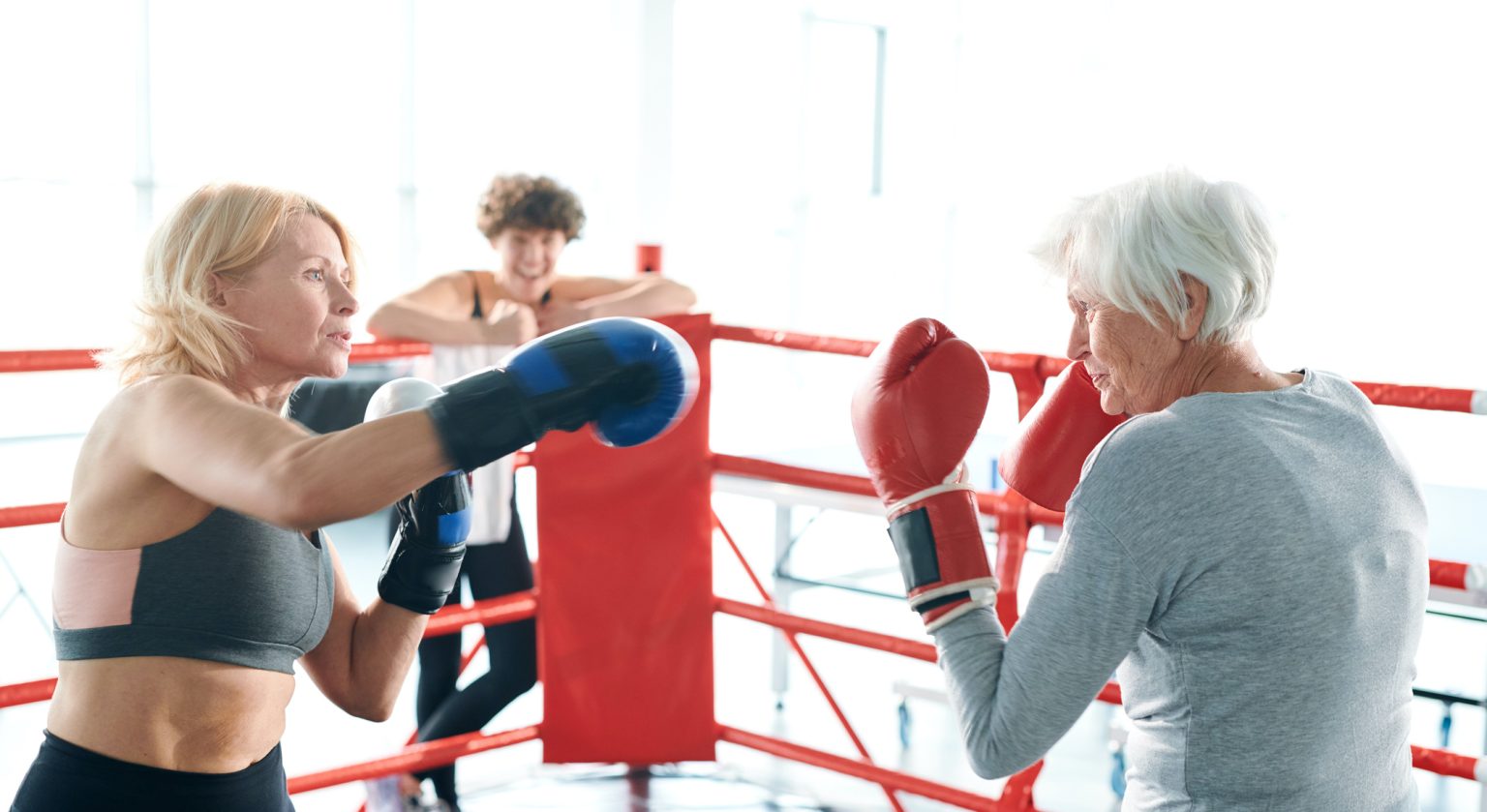
As a life-long endurance athlete junkie, no-one needs to convince me of the benefits of exercise – or persuade me too hard to go for a long run! – but I am a more recent convert to the benefits of strength (resistance) training. At the recent 2021 Menopause Conference we learnt of the importance of both cardiovascular and strength training for all adults, but especially for peri- and post-menopausal women.
Changes in Body Composition at Menopause
Dr Anna Alderton
As many of you will have experienced, perimenopause and menopause can be associated with weight gain. The hormonal changes that occur around this time result in changes to our body composition which result in central (around our mid sections or trunks) fat gains. A very large study of over a million pre- and post-menopausal women showed that whilst a women’s average weight gain was only 1kg, their average body fat increase was 2.9%, their trunk fat increased by 5.5%, their waist circumference increased by 4.6cm, and their hip circumference increased by 2cm. Another study comparing pre- and post-menopausal women has shown that lean muscle mass reduces by an average of 3%.
The Importance of Muscle Mass
We are increasingly recognising how important skeletal muscle is as an organ. Skeletal muscle produces and releases small proteins called myokines in response to muscular contractions which act on many other organs in the body such as the brain, the bones, the heart and lungs, the gut, the liver and the pancreas. This means that these myokines produced and released by the skeletal muscles have a really important role in keeping many of our bodies systems working smoothly, mediating ageing, and preventing disease progression. Studies have shown that if you have impaired skeletal muscle function, you are more likely to have poor health. Exercise REALLY is important! Unfortunately, the menopausal transition is often a period of inactivity, decreased fitness and weight gain, when it is a CRITICAL period to initialise and promote physical activity, especially for sedentary women.
Midlife Fitness Matters!

A study has shown that a higher level of aerobic fitness at midlife is associated with living longer (5yrs+); the fitter you are, the longer you live!
Another study has shown higher levels of aerobic fitness at midlife are associated with an 88% decreased risk of dementia compared to a medium fitness in women
Why Strength is your Greatest Strength
Despite fears of turning into Arnold Schwarzenegger (which I promise will never happen, again due to our hormones) we need to lift some weights. A large study in 2016 of older adults showed that improving muscle strength and muscle mass reduces the risk of major chronic conditions, such as
20-25% reduction in all-cause mortality (dying from any cause)
20-25% reduction in cardiovascular disease
30% reduction in type 2 diabetes
15-20% reduction in cancer mortality
How much exercise should I be doing?
The 2020 WHO (World Health Organisation) Guidelines on Physical Activity and Sedentary Behaviour for Adults contains three components:

Adults should do at least 150– 300 minutes of moderate-intensity aerobic physical activity; or at least 75–150 minutes of vigorous intensity aerobic physical activity; or an equivalent combination of moderate- and vigorous-intensity activity throughout the week, for substantial health benefits. (CARDIO)
Adults should also do muscle strengthening activities at moderate or greater intensity that involve all major muscle groups on 2 or more days a week, as these provide additional health benefits (STRENGTH/RESISTANCE)
Adults should limit the amount of time spent being sedentary. Replacing sedentary time with physical activity of any intensity (including light intensity) provides health benefits. (LIMIT TIME BEING SEDENTARY)
The Bottom Line
In summary, muscle and fitness matter! Skeletal muscle strength and function are just as important as preventing weight (fat) gain. Maintaining muscle mass and not loosing this as we age is critical. If weight loss is required at peri-or post menopause, a high dose of physical activity (>225mins/week) is likely to be required for weight loss. Aerobic and resistance training with caloric restriction and ensuring adequate dietary protein intake would be recommended.
What Are You Waiting For? Get Moving At Home
What is WellFemme About?
If you can’t find the professional help you need for your menopause or perimenopausal symptoms then book a Telehealth consultation with an expert WellFemme menopause doctor.
WellFemme is Australia’s first dedicated Telehealth menopause clinic, servicing locations nationwide including: Melbourne, Sydney, Adelaide, Darwin, Perth, Hobart, Brisbane, Dubbo, Bendigo, Broken Hill, Broome, Alice Springs, Launceston, Cairns, Mildura, Lightning Ridge, Kalgoorlie, Albany, Toowoomba, Charleville, Port Headland, Katherine, Ballarat, Coober Pedy, Bourke, Albury… and your place!