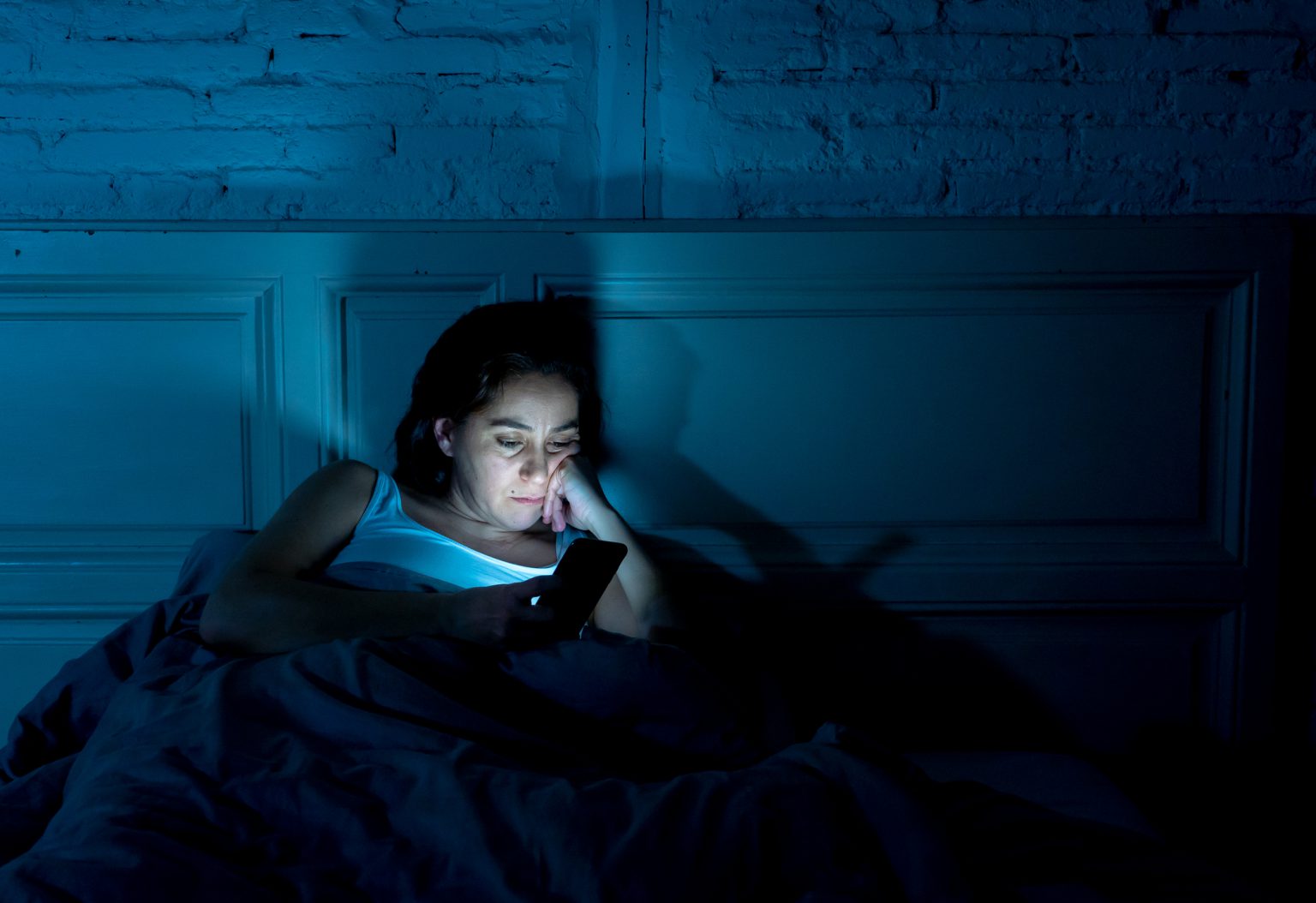
Sleep problems at perimenopause are very common and distressing.
How Common are Sleep Problems at Perimenopause and Menopause?
Reports from various sources suggest up to 60% women experience sleep disturbance at some stage during the menopausal transition (rates before perimenopause are about half this).
Around a quarter of women have severe symptoms that effect daytime functioning, qualifying them for a diagnosis of insomnia (ie. no other sleep disorder present).
Insomnia disorder in the general population is linked with adverse mental and physical conditions, including depression and cardiovascular disease. It causes reduced functioning in all aspects of daily living including occupational functioning, and contributes to many accidents.
What Causes Sleep Problems around menopause?

Sleep disorders, eg. Obstructive Sleep Apnoea (OSA), circadian rhythm disorders, parasomnias, restless legs, etc.
Studies show that sleep difficulties are uniquely linked with menopausal stage and changes in hormones, over and above the effects of age or culture.
Sudden or earlier menopause is associated with more severe symptom.
The strongest predictor of menopausal sleep problems is a history of pre-menopausal insomnia.
Contributors:
Hot flushes and night sweats– many are associated with waking and wakefulness*
Depression/ anxiety (cause, or effect?)
Breathing disorders, snoring (one large community-based study (SWAN) 20% midlife women had sleep disordered breathing such as apnoeas). SDB increases with age.
Obesity
Movement disorders like restless legs (which increase around menopause also)
Caffeine
Alcohol
Stress
Chronic disease/ pain
Mattress/pillow/environment
Partner factors, eg. movement, snoring
Environmental factors, eg. room temperature, noise, light
Behavioural factors, eg. viewing screens, erratic sleep and wake times, no exercise
*Not all hot flushes are associated with waking, and not all periods of wakefulness are associated with hot flushes. However hot flushes strongly correlate with poor sleep.
How Will I know If I have a Sleep disorder?
Well, besides the obvious (feeling tired) there are a number of screening tools you could try. Discuss the results with your GP:
Sleep Apnea screening: STOP BANG
Epworth Sleepiness Scale
Global Sleep Assessment Questionnaire
If you suffer from severe sleep problems and don’t have any improvement after the following measures then ask your GP for a referral to a sleep specialist.
How Are Sleep Disorders around Menopause Treated?
There is often a huge behavioural component to sleep issues which must be addressed along with the medical ones. As quoted in the reference article below: “No matter what the precipitating factors for insomnia are, behavioural conditioning and sleep-associated behaviours may prolong insomnia; these behaviours need to be addressed in order to successfully treat insomnia.”
Take a systematic approach to the management of your sleep problems:
1. Identify and treat the contributing factors: Treat hot flushes, lose weight, see sleep specialist for MAS or CPAP, optimise treatment of anxiety/depression and other chronic conditions, make sure pain is adequately managed, etc.
2. Sleep hygiene- behavioural changes to improve sleep problems:
Stick to regular sleep and wake times
Don’t ignore tiredness, get ready for sleep when your body signals you
Don’t go to bed if you don’t feel tired
Get up for a while if you haven’t gone to sleep within 20-30mins
Get early morning sun exposure (sets circadian rhythms)
Fix your environment: not too hot, good mattress, low light/noise
Make sure the bed is reserved for just sleeping or sex
Avoid alcohol, cigarettes, caffeine (including cola or chocolate)
Avoid daytime napping
Avoid screen time within 90mins of bedtime. Red-shift your devices. Get a kindle, don’t read off iPad/phone. Reserve last 90mins before bed to relaxing your mind.
Avoid vigorous exercise or highly stimulating activities close to sleep time.
Try a warm bath before bed, and/or a warm milky drink.
Practice meditation/ mindfulness or breathwork to relax mind and body.
3. “Natural” sleep enhancers:
Cognitive Behavioural Therapy has the best evidence. Other interventions with modest benefit include high-intensity exercise, Yoga, Soy isoflavones.
There is only limited evidence for herbal remedies (see factsheet from the Sleep Health Foundation).
This Review article states: “Findings suggest that certain supplements, particularly valerian, hops, and melatonin, could be effective in improving sleep quality and reducing insomnia symptoms… However, the strength of the evidence varies with unestablished optimal dosages, formulations, and treatment durations. Although generally considered safe, these supplements are not without risks…”
Earplugs also work great if noise or partner snoring is a problem!
There is also some evidence for sleep improvement with magnesium, however evidence for its benefit in treating leg cramps is poor, except in pregnant women.
4. Medical Options
Hormonal or non-hormonal treatment for any hot flushes
For those on Menopausal Hormone Therapy (MHT), micronized progesterone taken orally at night is sedating.
SSRI antidepressants and gabapentin have been shown to reduce flushes and insomnia
Agomelatine (marketed in Australia as Valdoxan)- a melatonin-related molecule used as a ‘gentle’ antidepressant with sedating properties. Take in the evenings.
Melatonin- taken before bed, it enhances your natural pre-sleep melatonin surge.
Amitriptyline- an older style antidepressant which is often used “off-label” due to its sedating properties. Also good for neuropathic (nerve) pain, migraine prevention and depression/anxiety.
Sedating antihistamines such as promethazine hydrochloride (Phenergan is one brand). Available over the counter, but get advice from the chemist and start low-dose; they can leave you feeling groggy the next day.
Medication for restless legs, which you can discuss with your GP. Also try neurological distraction techniques such as a back rub or mind-puzzle. Incidentally, sedating antihistamines can make restless legs worse.
Short-acting benzodiazepines like temazepam should be avoided due to dependence/escalation issues.
Zolpidem (Stilnox is one brand) may have significant side effects so approach with caution and only with GP supervision.
Resources:
Mindfulness/ meditation, eg. Headspace
Written resources: Australasian Menopause Society, Sleep Health Foundation, Better Health Channel- Sleep Hygiene
GP
Therapists, psychologists, hypnotists. Cognitive behavioural therapy
Specialist Sleep Physicians
Try these great pre-sleep exercises, courtesy of Exercise Physiologist and WellFemme friend Kirra Rankin:
References:
Journal Article: “Sleep problems during the menopausal transition: prevalence, impact, and management challenges”: https://www.ncbi.nlm.nih.gov/pmc/articles/PMC5810528/
AMS Information sheet: “Sleep disturbance and the Menopause”
_______________________________________________________________________________________________________________________________________________
What is WellFemme About?
If you can’t find the professional help you need for your perimenopausal symptoms then book a Telehealth consultation with an expert WellFemme menopause doctor.
WellFemme is Australia’s first dedicated Telehealth menopause clinic, servicing locations nationwide including: Melbourne, Sydney, Adelaide, Darwin, Perth, Hobart, Brisbane, Dubbo, Bendigo, Broken Hill, Broome, Alice Springs, Launceston, Cairns, Mildura, Lightning Ridge, Kalgoorlie, Albany, Toowoomba, Charleville, Port Headland, Katherine, Ballarat, Coober Pedy, Bourke, Albury… and your place!