



Breast Pain & Tenderness
Breast pain or tenderness during perimenopause is common and usually linked to hormonal fluctuations. The discomfort may feel like aching, soreness, or a burning sensation, and it can affect one or both breasts. These changes are typically temporary and part of your body’s natural transition toward menopause.
Free AssessmentWhat Causes Breast Pain During Perimenopause?
The most common cause is hormonal change. As estrogen and progesterone levels rise and fall irregularly, breast tissue can retain fluid and become more sensitive. This is often called mastalgia, which simply means breast pain.
You may notice:
- A feeling of fullness or tenderness in one or both breasts
- A dull ache, sharp pain, or burning sensation
- Soreness that varies from day to day
- Pain that may extend to the underarm or chest area
Other factors that can contribute to breast pain include:
- Tight or poorly fitting bras that lack support
- Caffeine or high salt intake
- Stress and lack of sleep
- Breast cysts or fibrocystic changes
Certain medications, such as hormone therapy or antidepressants
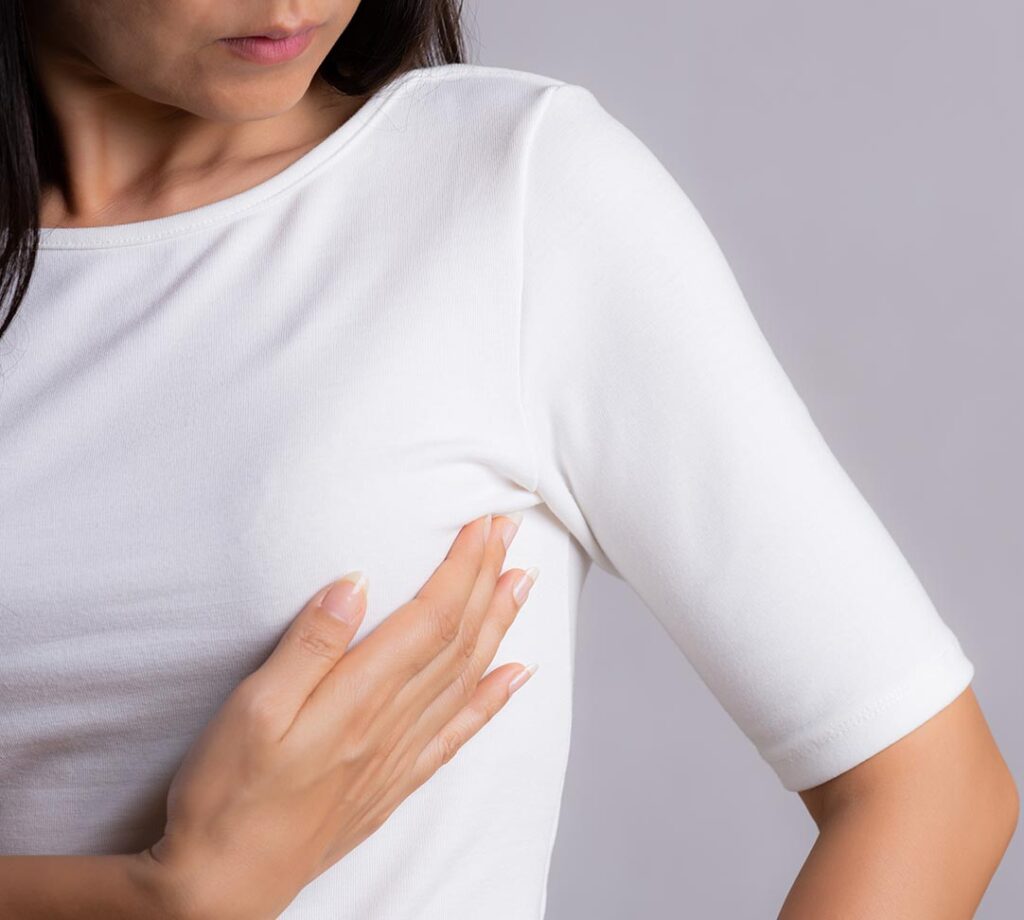
Cyclic vs. Non-Cyclic Pain
Breast pain can be cyclic, meaning it occurs in rhythm with hormonal changes, or non-cyclic, meaning it has no connection to the menstrual cycle.
- Cyclic pain often appears in both breasts and worsens before a period.
- Non-cyclic pain may persist after menopause and can affect one side more than the other.
During perimenopause, both types can occur as hormone levels fluctuate.
Treatment and Relief Options
Most cases of perimenopausal breast pain can be eased with simple self-care and lifestyle changes. Your WellFemme menopause doctor may suggest:
- Wearing a well-fitting, supportive bra
- Reducing caffeine and salt intake
- Using warm compresses or gentle massage to relieve tenderness
- Maintaining a healthy, balanced diet and regular exercise
- Over-the-counter pain relief, such as paracetamol or ibuprofen, if needed
- Reviewing current medications if symptoms persist
If discomfort is ongoing or severe, hormonal options such as menopausal hormone therapy (MHT) may help by balancing estrogen and progesterone levels.
Book an AppointmentWhen to Seek Help
Breast pain during perimenopause is usually harmless. However, you should speak with your doctor if you notice:
- A lump or area of thickening in the breast
- Nipple discharge or changes in breast shape
- Redness, swelling, or warmth in the breast
- Pain that is severe, persistent, or only on one side
Your doctor can rule out other causes and ensure there are no underlying conditions.
If you are unsure whether your symptoms are hormonal or something else, book a Telehealth consultation with a WellFemme menopause doctor for reassurance and tailored advice.
Book an Appointment