


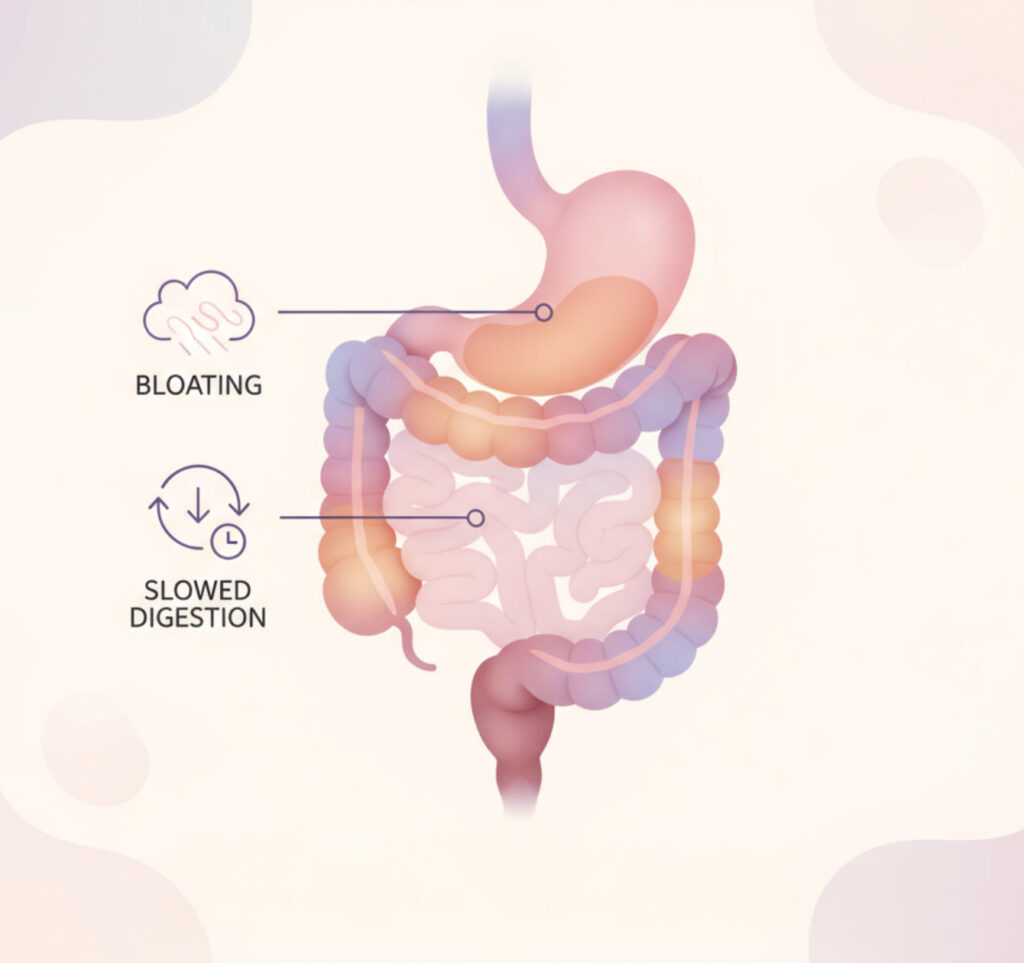
Digestive problems after menopause
Bloating, constipation, trapped wind, or indigestion are common complaints after menopause. Hormonal changes can affect the way the digestive system functions, leading to discomfort, irregular bowel habits, or increased sensitivity to certain foods. While these issues are often related to menopause, they can also overlap with other conditions, so it’s important to understand what’s normal and when to seek support.
Free AssessmentHow menopause affects digestion
As estrogen and progesterone levels decline, their influence on the gut also changes. These hormones play a role in regulating how food moves through the digestive tract, how much water is absorbed, and how the body responds to inflammation. When they fluctuate or drop, several effects can occur:
- Slower digestion: Food can take longer to move through the gut, leading to constipation, bloating, or fullness after meals.
- Increased sensitivity: Hormonal shifts can make the gut more reactive, amplifying sensations of cramps or discomfort.
- Changes in gut bacteria: The decline in estrogen can alter the gut microbiome, affecting digestion and nutrient absorption.
- Heightened stress response: Higher cortisol levels can slow digestion and cause symptoms like wind or nausea.
Emotional stress during menopause, combined with busy schedules or disrupted sleep, can also impact the brain–gut connection, making digestive symptoms worse.

Common digestive symptoms
Digestive changes after menopause can vary from mild to more persistent. You might experience:
- Constipation or irregular bowel habits
- Bloating or trapped wind
- Heartburn, indigestion, or reflux
- Cramps or abdominal discomfort
- Nausea or loss of appetite
If symptoms are new, severe, or accompanied by pain, blood in your stool, or unexplained weight loss, it’s important to speak with your GP for further investigation.
Book an AppointmentWays to support gut health
Gentle lifestyle and dietary changes can often make a big difference in easing digestive symptoms.
- Eat for balance
Include plenty of fibre-rich foods such as vegetables, fruit, whole grains, and legumes. Eat smaller, regular meals, reduce highly processed foods, and limit caffeine, alcohol, and fizzy drinks. Probiotic-rich foods such as yoghurt or kefir, and prebiotic foods like garlic, onions, and asparagus, can help support healthy gut bacteria. - Stay hydrated
Water helps food move through the intestines and prevents constipation. Aim for around eight glasses a day, adjusting for exercise and climate. - Move your body
Exercise stimulates digestion and reduces bloating. Even a daily walk can help keep your gut functioning well. - Manage stress
Mindfulness, yoga, or breathing exercises can calm the nervous system and improve digestion. Reducing stress also lowers cortisol, which in turn supports gut motility. - Sleep well
Poor sleep disrupts hormone balance and digestion. A consistent sleep routine supports better gut health and overall energy.
6. Seek medical or nutritional advice
If digestive issues are frequent or affecting daily life, your doctor may recommend testing for food intolerances or other conditions. Menopausal Hormone Therapy (MHT) may also help if symptoms are linked to hormonal changes.
