Most women know that menopause can cause unpleasant symptoms, but what if you’re still having periods?
Menopause expert Dr Kelly Teagle and writer/columnist Jo Pybus presented this webinar called “Demystifying Perimenopause” which you may find helpful, even though it’s a bit old now… and yes, Perimenopause definitely IS a thing!
What is menopause?
The definition of menopause is the final menstrual period, signalling the final ovulation (release of an egg from the ovaries). It is confirmed once you have been 12months without a period. Menopause happens when the ovaries run out of eggs. As the number of eggs reduces below 100 women will usually have changes to their menstrual cycle accompanied by erratic fluctuations of their reproductive hormones. It’s these hormonal fluctuations that cause many of the classical menopause-related symptoms: hot flushes, mood swings, sleep disturbance, vaginal changes, musculoskeletal aches and pains, cognitive and urinary issues.
OK, so what is perimenopause?
Officially the start of perimenopause is marked by the onset of irregular or ‘variable length’ cycles, with at least 7-day difference in cycle length between consecutive cycles OR a cycle length <25 days or >35 days. Unofficially, many women I see with perimenopausal symptoms still report having fairly regular periods. From the Australasian Menopause Society’s information sheet on perimenopause, symptoms are “…likely a reflection of the complex changes occurring in reproductive hormones… Erratic peaks in oestradiol and inconsistent luteal phase levels of progesterone are common and… there is a wide variation in menstrual cyclicity and menstrual flow.
What are the symptoms of perimenopause?
The AMS info sheet also states that: “Women can complain of symptoms of both excess oestrogen (headaches, breast tenderness, menstrual flooding) and symptoms of oestrogen deficiency (vaginal dryness, vasomotor symptoms [hot flushes and night sweats]).” [Note however that progesterone (and synthetic variants) can also cause breast tenderness, plus other typical pre-menstrual symptoms like moodiness, nausea and bloating.] It goes on to say that:
In EARLY perimenopause, women are more likely to complain of high oestrogen-associated symptoms (heavy periods, breast tenderness, weight gain, headaches), and
in the LATE menopausal transition, more likely to complain of low oestrogen-associated symptoms (flushes or sweats, vaginal dryness).”
Why is it so hard to diagnose perimenopause?
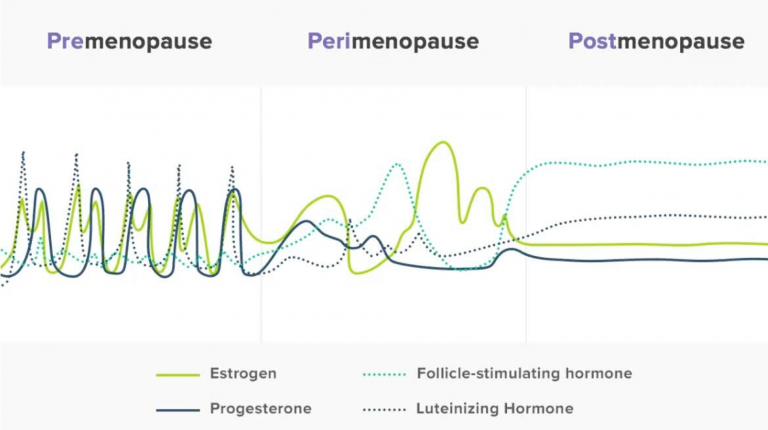
The menopausal transition is often overlooked as a cause of these symptoms because women are still having periods or have normal looking hormone tests. In fact, the typical menopausal symptoms may start years before you have your final period (which signifies official “menopause”). This period of hormonal instability preceding the final menstrual period (and ovulation) is known as Perimenopause. Hormonal tests are notoriously unreliable in perimenopause, as the diagram below illustrates. At times they may look normal, but at others very abnormal, and this can vary a lot from week to week.
The hormonal chaos of Perimenopause (picture courtesy of Flordis.com.au) It can also be hard to work out if you’re not having periods or your ovulations are suppressed by hormonal treatments. Women who’ve had a hysterectomy and some with a Mirena IUD don’t have periods. Women on the pill, implanon or depo injections do not ovulate, and may or may not have regular bleeds.
What are the different stages of perimenopause?
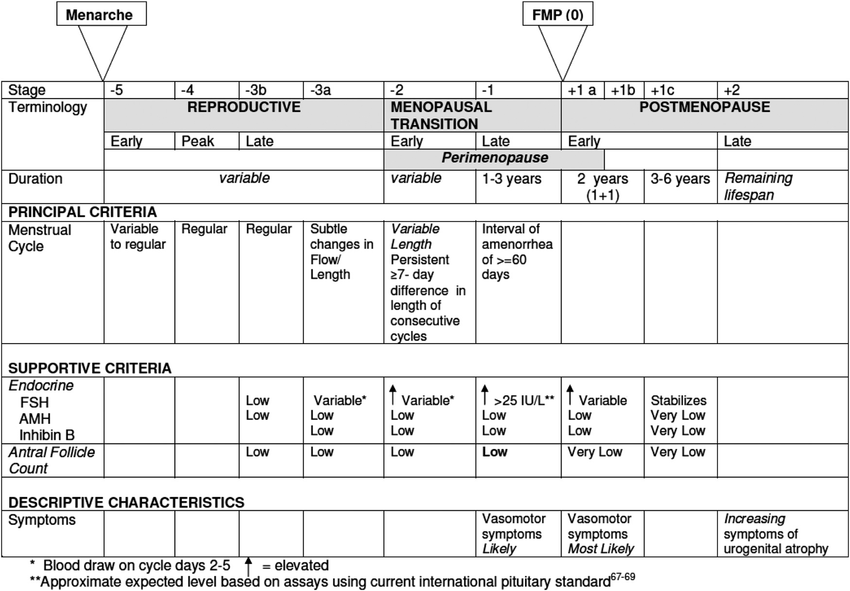
This diagram demonstrates the stages of the menopausal transition according to the STRAW CRITERIA (Stages of Reproductive Ageing Workshop criteria)
FMP= Final Menstrual Period (time zero!)
What are the treatment options for perimenopause symptoms?
The choice of treatment may not be straightforward, and depends on the woman’s:
Range of symptoms
Relative severity of symptoms
Other medical problems,
Existing medications
Risk factors, and
Priorities and preferences
As a general rule, if hormonal fluctuations are considered a significant factor in her symptoms then there are some hormonal options to help stabilise them:
Suppression of ovulations- the pill, implanon, depo injections or “chemical menopause”;
Using specific progestogens to target specific symptoms, eg. Norethisterone for heavy periods or breast tenderness, or micronised progesterone for sleep and anxiety.
Examples of non-hormonal treatments include the use of antidepressants for mood symptoms or hot flushes, melatonin for sleep problems and medications for urinary urgency. Lifestyle and environmental factors also play a major role in the management of symptoms right throughout the menopausal transition. Examples include:
If you can’t find the professional help you need for your peri/menopausal symptoms then book a telehealth consultation with an expert WellFemme menopause doctor.
WellFemme is Australia’s first dedicated Telehealth menopause clinic, servicing locations nationwide including: Melbourne, Sydney, Adelaide, Darwin, Perth, Hobart, Brisbane, Dubbo, Bendigo, Broken Hill, Broome, Alice Springs, Launceston, Cairns, Mildura, Lightning Ridge, Kalgoorlie, Albany, Toowoomba, Charleville, Port Headland, Katherine, Ballarat, Coober Pedy, Bourke, Albury… and your place!