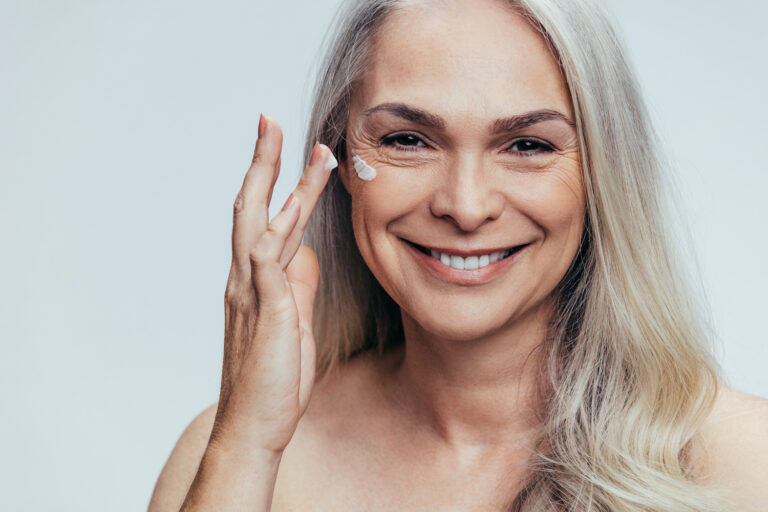
Estrogen face creams are now being marketed as a “natural” anti-ageing solution. But does the science back up the hype?
By Dr Rebecca Jarvis and WellFemme staff writer Sally Stankovic
As women enter perimenopause skin changes can become hard to ignore. Dryness, thinning, fine lines, and wrinkles often appear more quickly than we’d like. With that comes a wave of new products and promises — one of the latest being estrogen creams, marketed as a “natural” anti-ageing solution. But does the science stack up? Let’s take a closer look.
What Are Estrogens?
To understand the claims, it helps to know what estrogens actually do. Estrogens are sex hormones central to puberty, menstrual cycles, and pregnancy. But their influence stretches far beyond reproduction. Estrogens affect the heart and blood vessels, bones and muscles, the brain, urinary tract, breasts, hair, mucous membranes — and skin.
Why Does Skin Age at Menopause?
One of estrogen’s key jobs is to support the production of collagen, elastin, hyaluronic acid, and sebum, all of which keep skin plump, hydrated, and resilient. As estrogen levels fall in perimenopause and menopause, skin loses these supports. The result? A weaker skin barrier, dryness, and visible signs of ageing such as fine lines, wrinkles, and sagging.
Estrogen and Menopause Hormone Therapy (MHT)
This is where Menopause Hormone Therapy comes in. The most potent estrogen, estradiol (E2), is prescribed to relieve classic symptoms of menopause like hot flushes, night sweats, mood changes, sleep problems, vaginal dryness, and urinary issues. In Australia, it comes as tablets, patches, gels, or vaginal pessaries.
There’s also estriol (E3), a much weaker estrogen, available as a vaginal cream for sexual and urinary symptoms.
However, neither E2 nor E3 has been approved for use directly on the face or neck.
What Does the Research Say About Skin?
Research shows systemic MHT can improve skin thickness, collagen, elasticity, and hydration. That sounds promising. But when it comes to applying estrogen creams directly to the face, the evidence is mixed.
Some studies suggest possible improvements, while others show little to no difference. The trials done so far have been small and limited, meaning no clear conclusions can be drawn. And while it might seem logical to assume that if estrogen cream works on vaginal skin it would work on facial skin too, that hasn’t been proven. In fact, studies on sun-damaged skin haven’t demonstrated consistent benefits.
But What’s the Harm in Trying?
It’s tempting to think there’s no downside to experimenting — but there are some important risks.
Estrogen creams in Australia often contain additives like alcohol and chlorhexidine, which can irritate the skin or trigger allergic reactions. Estrogen also stimulates melanin, raising the risk of hyperpigmentation, especially in women with a history of melasma or darker skin types.
Another concern is systemic absorption. We don’t know how much estrogen might enter the body if applied to the face, but too much can thicken the uterine lining, increasing the risk of endometrial cancer.
Finally, while there’s no firm evidence that melanoma is hormone-sensitive, studies on the link between MHT and melanoma have produced contradictory results. More research is definitely needed.
So What Can You Do for Your Skin?
There are plenty of evidence-based options to improve skin during the menopausal transition.
The most powerful tool you already have is sunscreen. Daily application is the best way to protect skin from ongoing ageing. Most people don’t apply enough to block vitamin D production, but it’s wise to check your levels and supplement if they’re low.
Other effective options include:
- Retinoids (retinol, retinal, tretinoin): proven to reduce fine lines, pigmentation, and acne.
- Hydrating agents like hyaluronic acid, ceramides, and niacinamide: boost moisture and strengthen the skin barrier.
- Vitamin B3 (niacinamide): helps with inflammation and acne; oral vitamin B3 can reduce the recurrence of some skin cancers in high-risk groups (check with your pharmacist first).
- Vitamin C: fights oxidative damage and reduces pigmentation.
- AHAs and BHAs: exfoliate and brighten, though they should be used carefully, especially on sensitive or darker skin types.
For those looking for more dramatic results, in-clinic treatments are also available — from fillers and biostimulatory injections, to microdermabrasion, chemical peels, lasers, and devices like Thermage and Ultherapy that stimulate collagen production. Surgical options remain the most intensive.
It is important to note that some changes to appearance as we age, such as hollowing under the eyes and temples, skin sagging and jowls, are not just due to skin changes. Redistribution of fat on the face and loss of bone also contribute to a more aged appearance.
Whatever you choose, always do your homework. The cosmetic industry in Australia isn’t tightly regulated, so don’t hesitate to ask practitioners about their qualifications and experience.
In Conclusion
Estrogen is vital for skin health, but using estrogen creams on the face is unproven, unapproved, and potentially risky. The benefits touted on social media are not backed by strong evidence, and safer, science-based alternatives already exist.
For now, the best approach is to stick with proven treatments like sunscreen, retinoids, and vitamin-based skincare — and seek professional advice for more advanced options.
Click here to download a factsheet.

What is WellFemme About?
If you can’t find the professional help you need for your menopause or perimenopausal symptoms then book a Telehealth consultation with an expert WellFemme menopause doctor.
WellFemme is Australia’s first dedicated Telehealth menopause clinic, servicing locations nationwide including: Melbourne, Sydney, Adelaide, Darwin, Perth, Hobart, Brisbane, Dubbo, Bendigo, Broken Hill, Broome, Alice Springs, Launceston, Cairns, Mildura, Lightning Ridge, Kalgoorlie, Albany, Toowoomba, Charleville, Port Headland, Katherine, Ballarat, Coober Pedy, Bourke, Albury… and your place!