While hot flushes and mood swings often dominate menopause discussions, bone loss represents one of its most serious, under-discussed consequences. Declining estrogen accelerates bone resorption, raising osteoporosis and fracture risks with lifelong impacts on mobility and independence.
The Role of Estrogen in Bone Health
Bones are living tissue, constantly breaking down and rebuilding in a process known as bone remodelling. Estrogen plays a critical role in maintaining this balance by slowing bone breakdown and supporting bone formation. During perimenopause and menopause, estrogen levels fall sharply. As a result, bone breakdown begins to outpace bone formation, leading to a gradual but significant loss of bone density. This hormonal shift is the primary reason women are at much higher risk of osteoporosis than men.
When Does Bone Loss Begin?
Bone loss doesn’t start after menopause – it begins earlier than many women realise.
Research shows that the most rapid phase of bone loss occurs:
● 1–2 years before the final menstrual period
● And continues for 2–5 years after menopause
During this time, women can lose bone density at an accelerated rate, particularly in the spine and hips – areas most vulnerable to fracture.
How Much Bone Is Lost?
The numbers are confronting:
● Women can lose up over 10% of their bone density in the first five years after menopause
● Over the first decade post-menopause, total bone loss may reach 20–25%
● By age 60, around half of women will have osteopenia (low bone density) or osteoporosis
Because bone loss occurs silently, many women are unaware until a fracture happens.
The Silent Disease
Osteoporosis is a condition where bones become weak and brittle, making them more likely to break – often from a minor fall or even everyday movements.
● There are usually no symptoms
● Bone loss happens gradually
● The first sign may be a fracture of the wrist, spine or hip
Hip fractures in particular can have devastating consequences, including long hospital stays, reduced mobility, and long-term loss of independence.
Who Is at Higher Risk?
While all women experience bone loss after menopause, certain factors increase risk:
● Early menopause (before age 40)
● Family history of osteoporosis
● Low body weight
● Sedentary lifestyle
● Smoking or excessive alcohol intake
● Low calcium or vitamin D levels
● Long-term use of certain medications (such as corticosteroids)
Women who had lower peak bone mass earlier in life are also more vulnerable, highlighting how bone health is influenced across the entire lifespan.
How Is Bone Health Assessed?
The most reliable way to assess bone health is with a DEXA (bone density) scan. This low-radiation test measures bone mineral density and helps diagnose:
● Normal bone density
● Osteopenia
● Osteoporosis
Bone density testing allows early intervention – ideally before fractures occur. Having reduced bone density doesn’t necessarily put you at high risk of fractures, though. Fracture risk is influenced by many other factors, particularly those that increase your risk of falling: poor balance, being frail, being on sedating medications… even having pets and rugs that you might trip over! One objective tool that can be used to assess fracture risk is the FRAX risk calculator, which takes into account a range of other environmental and personal risk factors. You can also take the free “Know Your Bones” Assessment from Healthy Bones Australia.
Prevention Strategies
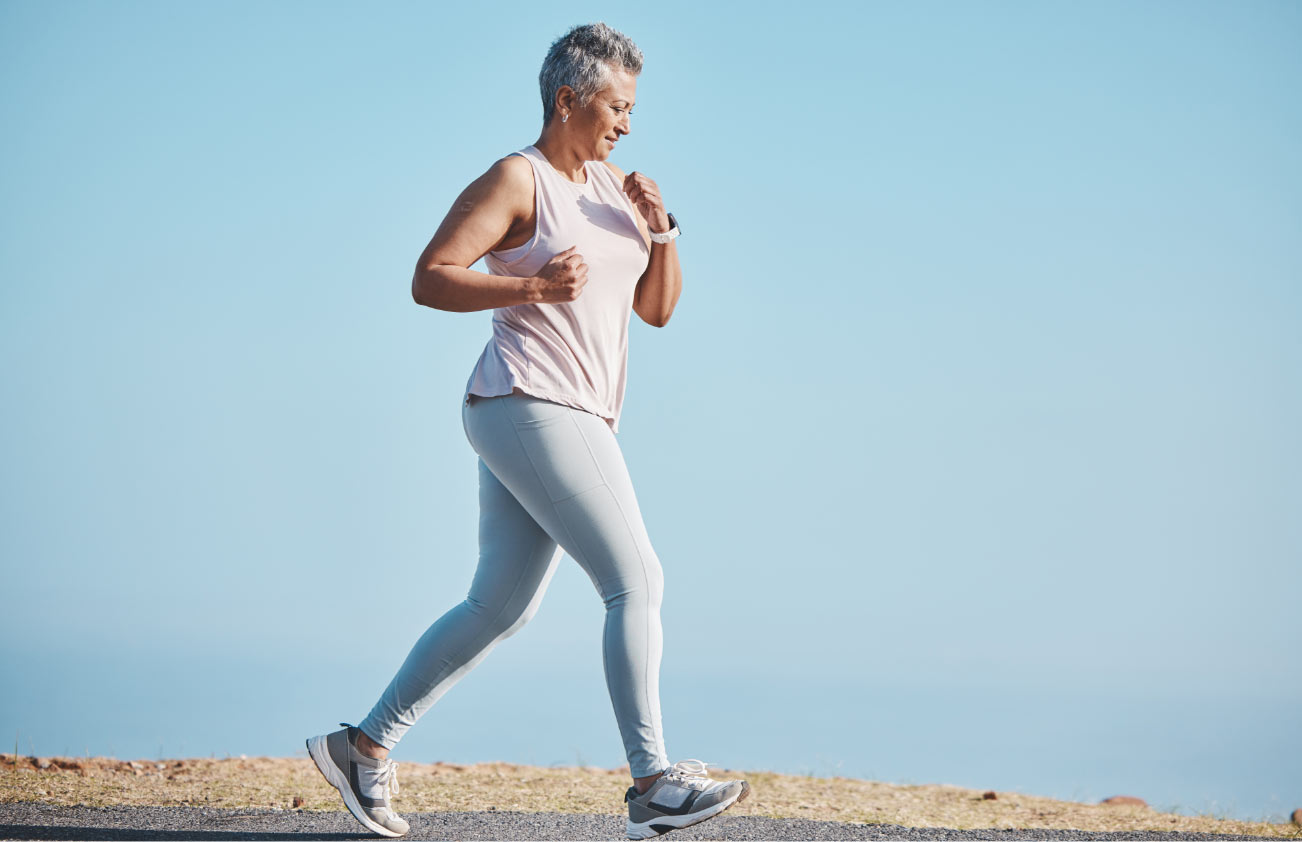
Physical activity is essential to keeping bones strong. The best type? Weight-bearing exercise – any movement where you’re on your feet, using gravity and muscle force to load your bones.
This includes:
● Brisk walking, dancing, jogging.
● Resistance training (80-85% max, 4-6 reps).
Exercise not only strengthens bones but also improves balance and coordination, which reduces the risk of falls – the cause of 90% of hip fractures in older adults. Lifting heavy weights (80–85% of your one-rep maximum) for just 4–6 reps can significantly stimulate bone growth. This is because bones adapt to stress by becoming denser and stronger. In short, bone is a “use it or lose it” tissue.
Nutrition supports bone health during and after menopause by providing calcium, vitamin D, protein, and other nutrients that help maintain bone density, reduce bone loss, and lower fracture risk.
● Calcium: Essential for bone strength. Found in dairy products, leafy greens, almonds and fortified foods.
● Vitamin D: Supports calcium absorption. Sourced from safe sun exposure and supplements if needed.
● Magnesium, potassium and vitamin K: Important for bone structure, strength and turnover.
● Protein: Supports bone formation and maintenance.
Menopausal hormone therapy (MHT) has been shown to help maintain or even increase bone density, reducing the risk of fractures. It also provides significant relief for hot flushes and many other menopausal symptoms.
Proactive Plan for Stronger Bones
Prioritising bone health isn’t just about avoiding fractures – it’s about preserving mobility, confidence, and independence.
● Exercise at least 3 x a week, gradually progressing or varying your routine over time (increase weight, intensity, duration or complexity). Short, higher-intensity bursts are better than long, repetitive sessions. And include a variety of movements to challenge your bones in different ways.
● Keep your weight in a healthy range – aim for a BMI between 20 and 25, which means not being underweight or overweight. This helps because too little body fat (low BMI) often means weaker bones with less density, raising fracture risk, while excess weight can strain them over time. Also, stop smoking completely and keep alcohol to no more than 1-2 drinks per day – both habits speed up bone loss by messing with estrogen and calcium use in the body.
● Ensure your diet has adequate calcium and vitamin D. Try to get your sources from nutritional foods and sunlight, but if your levels are inadequate (and your doctor has tested your levels), add supplements.
Declining bone health is one of the most serious – yet least discussed – side effects of menopause. The hormonal changes of this life stage significantly increase a woman’s risk of osteoporosis and fractures, often without warning. With awareness, screening, lifestyle changes and appropriate medical care, women can take meaningful steps to protect their bones, mobility and independence well into later life.
Further reading:
“Menopause and Bone Health”– Healthy Bones Australia
Healthy Bones Australia’s Exercise Guide
Menopause and Osteoporosis – Better Health Channel