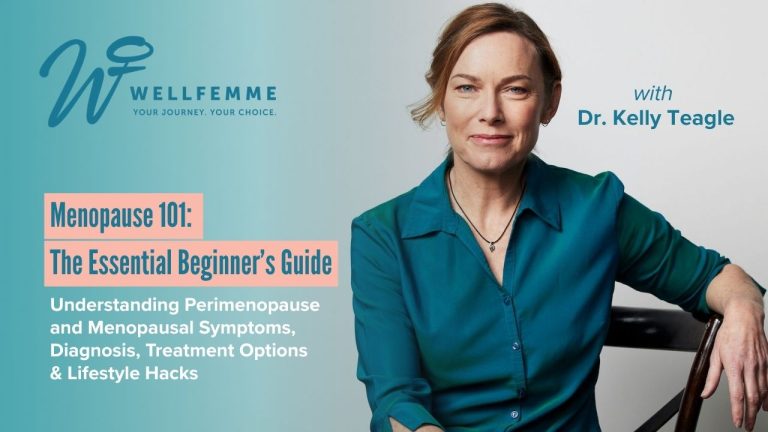
WellFemme founder Dr Kelly Teagle and psychologist Hilary Sargeant discuss one of the most troubling aspects of perimenopause: mental health problems.
WELLFEMME WEBINAR: “MENTAL HEALTH AND MENOPAUSE”, 24th August, 2020
How Common Are Mental Health Issues Around Menopause?
The short answer is: VERY common. There’s up to three time the risk for mental health problems during perimenopause compared to beforehand.
Australian statistical data reveals:
The highest suicide rate for females in 2015 was in 45–49yo’s (10.4 per 100 000).
Second highest rate of suicide was in women aged 50 to 54 years.
2007 ABS data: 43% of women 18-65 had a mental health problem at some time.
Economic cost of anxiety and depression in women estimated as high as $22 billion per year
What Causes Mental Health Issues Around Menopause?
Hormones
Perimenopause (ie. the pre-menopausal transition and early postmenopause) is “… a window of vulnerability” for the development of mental health issues, even with no previous issues. Estrogen levels decline substantially from pre-menopause to post-menopause, but it is not a smooth gradual decline; the reproductive hormones can fluctuate wildly, even during the course of a day.
Prof. of Psychiatry Jayashri Kulkarni AM, simplifies the effects of reproductive homones in the brain as follows: “think of oestrogen as being a ‘good’ hormone for the brain, and progesterone as a ‘bad’ hormone for the brain.”
This means that times in the menstrual cycle when estrogen is highest (first half to mid-cycle) tend to be the best for mood, and verbal memory (talking skills) as well apparently. Times when progesterone is highest tend to be associated with a worsening mood, eg. pre-menstrually. In around 4% of women this is very severe, and they may be diagnosed with premenstrual dysphoric disorder (PMDD). This condition requires medical and psychological treatment.
Other Factors
Other contributing factors to mental health issues around menopause include:
A previous history of mental health disorders, eg. postnatal depression, previous anxiety
Family or relationship problems
Caring for ageing parents or high-needs family members
Work stress
Poor physical health, chronic pain or disease
Lack of exercise
No time for self-caring and reflection
Other significant perimenopausal symptoms, like hot flushes and sleep disturbance
Drug and alcohol dependence
Negative perceptions of ageing, eg. body image and sexuality
“Empty nest” grief
A perceived lack of purpose or meaning in life, and/ or
A surgical or early menopause
How Do You Recognise Mental Health Issues Around Menopause?
Depression
There are two significant symptoms of depression; one (if not both) of these must be present for at least two weeks for a diagnosis of depression to be made:
Having low mood, feeling depressed or irritable most of the time (if not all of the time) and/or
Having a lack of interest or pleasure in usually enjoyed activities
Other symptoms can include:
Low motivation
Change in activity – feeling slowed down or alternatively having difficulty being still
Feelings of worthlessness/guilt
Thoughts about suicide or death
Some common symptoms of depression can be difficult to distinguish from symptoms of menopause, including:
Sleep disturbance (sleeping too much or too little)
Low energy/fatigue
Anger/hostility
Poor concentration
Weight or appetite change – eating more or less than usual
Changes to self-image
Anxiety
General signs and symptoms of an anxiety disorder include:
feeling very worried or anxious most of the time
finding it difficult to calm down
feeling overwhelmed or frightened by sudden feelings of intense panic/anxiety
experiencing recurring thoughts that cause anxiety, but may seem silly to others
avoiding situations or things which cause anxiety (e.g. social events or crowded places)
experiencing ongoing difficulties (e.g. nightmares/flashbacks) after a traumatic event.
Other signs of anxiety can be split into psychological/ emotional and physical symptoms. Again, some of these symptoms can overlap with other menopausal symptoms, so paying attention to the whole range of symptoms is important.
Psychological/ Emotional Symptoms
Overthinking/rumination
Trouble coping with uncertainty
Indecisiveness and fear of making the wrong decision
Being unable to relax, feeling restless, feeling on edge
Physical Symptoms
Fatigue
Trouble sleeping – including falling asleep and staying asleep
Sweating
Irritability
Muscle tension or muscle aches
Trembling, feeling twitchy
Nervousness or being easily startled
Nausea, diarrhea or irritable bowel syndrome
Medical Treatments for Mental Health Issues Around Menopause
Anti-depressant medication
Anti-depressants are indicated for chronic moderate to severe depression but are not effective treatment for mild depression. If they are going to help symptoms will usually respond by 4-6 weeks, although small changes may be noticed as early as 2 weeks.
Some anti-depressants can also reduce the number and severity of hot flushes by up to 50%. You might need to try differing doses or different medications, usually under the care of your GP or psychiatrist.
Estrogen treatment (“Off-label” use)
There is some evidence that estrogen has similar efficacy to antidepressants for depression in perimenopause (regardless of whether hot flushes or night sweats are present). It has not been shown to be effective for postmenopausal women however. This suggests a “window of opportunity” in perimenopause for effective estrogen therapy in mood disorders.
Estrogen therapy may potentially add to the effect of antidepressants. It’s important to note however that most studies have been done using estrogen-only treatment. The effect of combined HRT is not as well studied (ie. estrogen with progestin, which is needed for women who still have a uterus).
Hormonal contraceptives have also shown some mood regulation benefit in women approaching menopause. These cannot be used in women who have a high risk for unwanted blood clots (such as smokers, or those who experience migraines with aura), and cannot be used beyond age 50.
Psychological Treatments for Mental Health Issues Around Menopause
Psychological therapies might include Cognitive Behaviour Therapy, Behaviour Therapy, Mindfulness-based Cognitive Therapies and/or Interpersonal Therapy. These therapies can help you change or manage unhelpful thoughts, behaviours and/or ways of interacting with others which can otherwise help maintain depression.
Psychologists can help clients to manage unhelpful thinking, such as rumination (“getting stuck” in thoughts), self-critical thoughts and excessively thinking about the past or the future. Psychological treatment can also be provided via Telehealth, with Medicare rebates for patients who obtain a GP Mental Health Care Plan.
There is also a wealth of electronic mental health treatment options, including online courses, e-books, Apps, videos, podcasts and audiobooks. They are inexpensive, easy to access, can be used at any time of the day and have good evidence to support their effectiveness. Mood Gym, myCompass and MindSpot are good examples.
Behavioural strategies for Managing Mental Health Issues Around Menopause
Behavioural activation – Doing pleasant activities every day, planning your day
Physical activity – increasing movement (as little as 10 minutes a day can help with mood)
Increasing social support – spending time with supportive friends and family
Relaxation/meditation – learning to be more aware in the present moment
Reducing use of alcohol or other substances
Stress management
Getting Help For Mental Health Issues Around Menopause
Often the best place to start is with your GP. Ask for an extended appointment to discuss your concerns or make an appointment for a GP Mental Health Care Plan. A Mental Health Care Plan allows access to 10-12 sessions with a psychologist per calendar year with Medicare rebates. Private health insurance may also cover a portion of the session cost if you are not eligible for Medicare sessions or prefer not to go through Medicare.
There may be several weeks’ or months’ wait to see a psychologist so the earlier you seek help the better. It might also help to seek out a GP who specialises in managing menopause
If you can’t find the professional help you need for your peri/menopausal symptoms then book a telehealth consultation with an expert WellFemme menopause doctor.
WellFemme is Australia’s first dedicated Telehealth menopause clinic, servicing locations nationwide including: Melbourne, Sydney, Adelaide, Darwin, Perth, Hobart, Brisbane, Dubbo, Bendigo, Broken Hill, Broome, Alice Springs, Launceston, Cairns, Mildura, Lightning Ridge, Kalgoorlie, Albany, Toowoomba, Charleville, Port Headland, Katherine, Ballarat, Coober Pedy, Bourke, Albury… and your place!