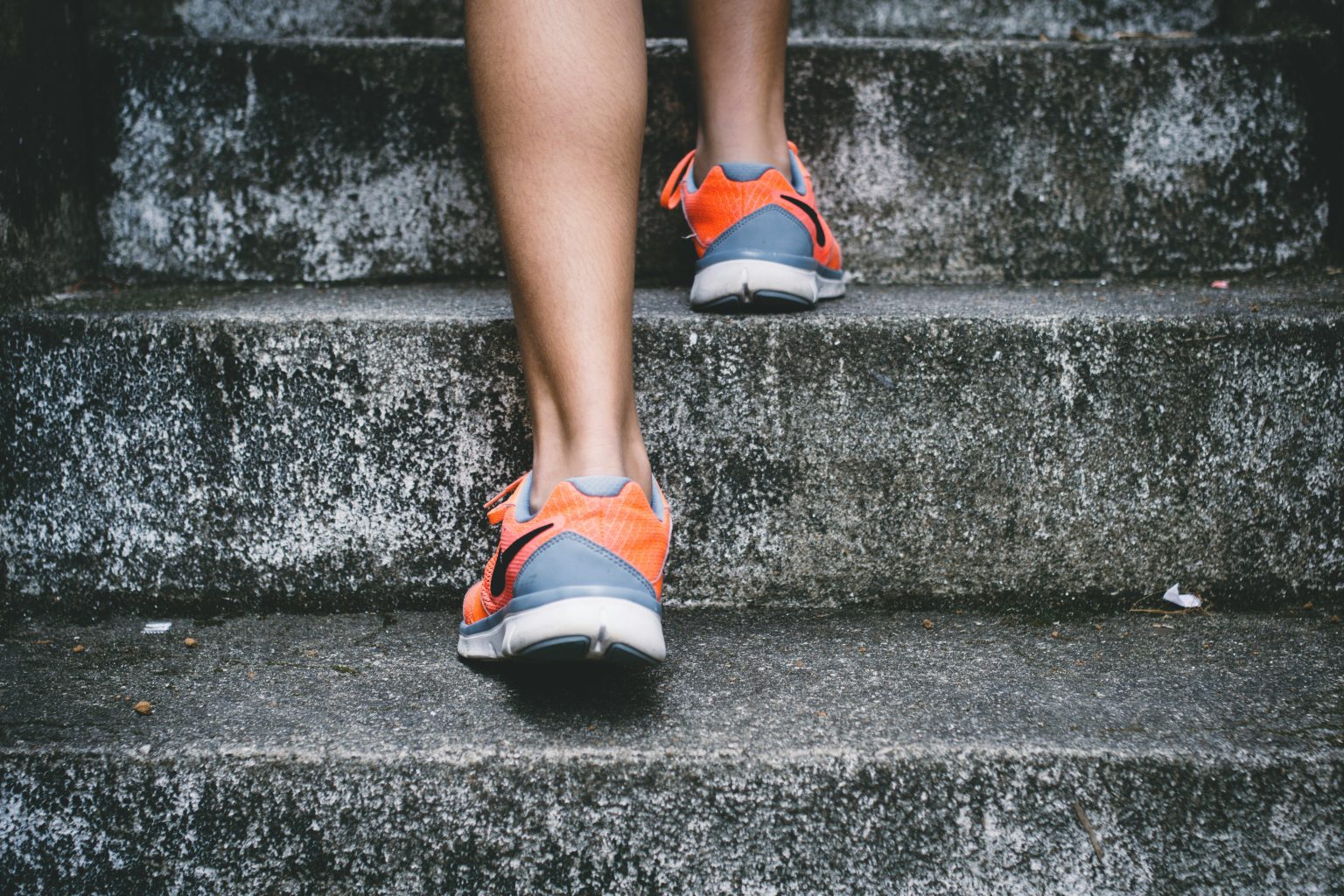
Why Do We Gain Belly Fat at Menopause? And What Are the Best Types of Exercise at Menopause?
By Courtenay Polock, Accredited Exercise Physiologist and WellFemme Staff Writer Sally Stankovic
Welcome to our two-part series about Exercise and Menopause. In Part One we will address these very common questions.
If you’re in your 40’s and staying active, yet still gaining weight around your belly, it can feel deeply frustrating. You’re not alone. One of the most asked questions is:
Why Do We Gain Belly Fat at Menopause?
Even if you’re eating well and staying active, menopause changes how your body stores and burns fat. Here’s why:
Hormones Are Shifting
As estrogen levels drop, your body starts to store fat differently. Estrogen helps keep fat in the hips and thighs (the classic “pear shape”). But with less estrogen and relatively more androgens (male hormones), fat starts to collect around the belly instead.
Fat Metabolism Slows Down
Your body becomes less efficient at breaking down and burning fat, especially in the abdominal area. The enzymes and hormones that used to help with fat-burning don’t work quite the same anymore.
Muscle Mass Drops
It’s also common to lose lean muscle during menopause. Less muscle means your metabolism naturally slows down, making it easier to gain fat even if you haven’t changed your habits.
Fat Cells Behave Differently
Fat tissue itself becomes a bit “dysregulated”, meaning it doesn’t handle sugar (glucose) or fat (free fatty acids) as well. This can lead to more fat being stored and even contribute to insulin resistance.
What Are the Best Types of Exercise at Menopause?
Many women feel lost when it comes to what actually works for this life stage. Here’s a breakdown of the 4 most effective types of exercise during menopause (without consideration to other injuries or underlying conditions):
1. Strength & Power Training (recommended 2-3 times per week)
Why it matters:
● Menopause accelerates sarcopenia (loss of muscle mass) and osteopenia (loss of bone density).
● Estrogen and progesterone support muscle repair, power, and contractile strength. With their decline, external mechanical stress is now needed to drive adaptation – this can be created through lifting weights
What to do:
● Progressive resistance training building to 60% of 1RM (1 repetition max) or higher. The higher the load, the greater the muscle adaptation BUT…
● You MUST work up to this gradually, training the basic movements and technique at lower weights for muscle memory before lifting heavier weights.
● Focus on strength and power with multi-joint movements to stimulate full-body strength.
● Train movement patterns (hinge, squat, push, pull, carry, rotate).
2. Bone-Loading Impact Exercise (recommended 1-2 times per week)
Why it matters:
● Dynamic (moving) loading is more effective than static (still) loading for bone growth.
● Estrogen normally regulates bone remodeling, but after menopause bones need more direct load.
What to do:
● High-strain, low-volume impact training (eg. jumps, hops, multidirectional bounding).
● If you can’t do higher impact movements, even low-impact stomping or heel-drops are effective.
● 10 minutes twice a week is ideal, but doing a minute here and there more often (perhaps waiting for the kettle to boil) will also work.
● Combine with balance or dual-task training to reduce falls risk and increase loading diversity.
3. Cardiovascular Training (recommended 3-5 times per week)
Why it matters:
● Cardiovascular (CV) risk increases post-menopause due to changes in endothelial function, heart rate regulation, and lipid metabolism.
● Vasomotor symptoms (hot flushes) are tied to poor vascular and metabolic health.
What to do:
● Moderate-intensity aerobic exercise (eg. walking, cycling, swimming), ideally for 150–300 mins/week.
● OR HIIT (High Intensity Interval Training): short bursts of activity at close to maximal heart rate max for short bursts, eg. bike sprints for 8 seconds on/12 seconds off; start at a few minutes and work up to 20 mins.
● Start low and build up tolerance
● Menopausal women fatigue faster and need more rest between sessions.
4. Restorative & Mobility-Based Training (Daily or as needed)
Why it matters:
● Joint stiffness, pain, sleep disturbances, and nervous system dysregulation are common in menopause.
● These sessions help recovery, reduce inflammation, and improve parasympathetic tone.
What to do:
● Yoga, breathwork, pilates, mobility flows, gentle walking.
● Add postural control, pelvic floor care, and core stability for those with musculo-skeletal or pelvic symptoms.
● Great for low-energy days or when mental fatigue is high.
So why do we gain belly fat at menopause? In short, menopause changes how your body stores and burns fat. But targeted exercises can help boost metabolism, preserve muscle and bone, and reduce belly fat during menopause.
CLICK HERE for Part Two of our “Exercise in Menopause” feature, where we answer the questions:
- Can exercise help with hot flushes, mood swings and night sweats? and
- Why are my energy levels so low at menopause?
 About Courtenay Polock
Courtenay is an Accredited Exercise Physiologist and founder of HER Exercise Physiology. She kicked off her career in women’s health as a personal trainer helping women navigate training in the gym. Courtenay transitioned into Exercise Physiology after realising that women’s health conditions were holding her clients back from achieving their health and fitness goals. She loves all things women’s health but has an exceptional love for pelvic health care focusing on all things pelvic floor helping active women resolve their symptoms whilst doing all the activities they love! You can book a personal consultation with Courtenay HERE.
What is WellFemme About?
If you can’t find the professional help you need for your menopause or perimenopausal symptoms then book a Telehealth consultation with an expert WellFemme menopause doctor.
WellFemme is Australia’s first dedicated Telehealth menopause clinic, servicing locations nationwide including: Melbourne, Sydney, Adelaide, Darwin, Perth, Hobart, Brisbane, Dubbo, Bendigo, Broken Hill, Broome, Alice Springs, Launceston, Cairns, Mildura, Lightning Ridge, Kalgoorlie, Albany, Toowoomba, Charleville, Port Headland, Katherine, Ballarat, Coober Pedy, Bourke, Albury… and your place!